Many people first try pharmacy treatments when they notice a fungal nail. Medicated polishes, creams and solutions are easy to access and seem like a logical starting point. However, at Adelaide Fungal Nail Laser Clinic, we regularly see patients who have used these products for months — or even years — with little to no improvement.
Understanding why these treatments often don’t work helps explain why laser therapy, including K-Laser and Lunula, can be a more effective option.
Why Pharmacy Fungal Nail Treatments Often Don’t Work
Pharmacy treatments are usually topical antifungal products designed to be applied to the surface of the nail. While they may help very mild or early infections, they face several major limitations.
1. They Can’t Penetrate the Nail Effectively
Toenails are thick, dense and slow-growing. Most topical treatments struggle to penetrate deeply enough to reach the fungal infection, which often lives under the nail plate and within the nail bed.
As a result, the fungus may remain active beneath the surface even if the nail looks temporarily better.
2. Fungal Nails Are Slow to Change
Toenails grow very slowly — often taking 9–12 months to fully replace. This means topical treatments require consistent daily application for long periods. In reality, many people stop early when results aren’t visible, allowing the fungus to persist or return.
3. Fungi Are Highly Resilient
Fungal organisms can survive in shoes, socks and surrounding skin. Even if a topical product reduces surface fungus, reinfection is common if the underlying environment isn’t addressed.
This explains why fungal nails often seem to “improve” briefly before worsening again.
4. Pharmacy Products Don’t Address the Nail Environment
Topical treatments focus on killing fungus but don’t improve:
- Nail thickness
- Circulation to the nail bed
- Immune response in the affected area
Without addressing these factors, long-term success is difficult.
Why Laser Therapy Works Differently
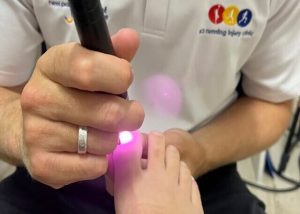
Laser treatment takes a fundamentally different approach. Instead of relying on surface absorption, laser energy penetrates through the nail plate to target the infection at its source.
At Adelaide Fungal Nail Laser Clinic, we use two advanced systems — K-Laser and Lunula Laser — because they work in complementary ways.
How K-Laser Helps Treat Fungal Nails
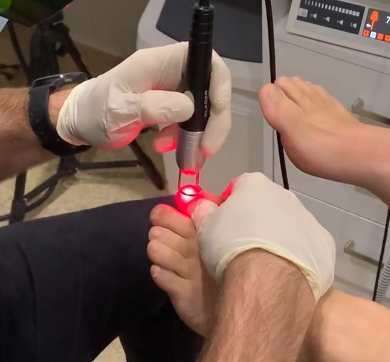
K-Laser uses focused infrared energy that penetrates deeply into the nail and surrounding tissue. This helps to:
- Reduce fungal load beneath the nail
- Stimulate blood flow to the nail bed
- Support healthier nail growth
- Improve the nail environment so fungi are less likely to survive
The gentle warming effect also helps prepare the nail for recovery.
How Lunula Laser Supports Nail Recovery
Lunula Laser uses low-level laser energy that works without heat. Instead of targeting the fungus directly, it focuses on:
- Stimulating the body’s immune response
- Encouraging healthier nail regrowth
- Improving cellular activity around the nail matrix
This makes it particularly suitable for patients who prefer a non-heating treatment option.
Why Combining Laser Treatments Improves Outcomes
Fungal nail infection is rarely solved with a single approach. Combining K-Laser and Lunula Laser allows us to address both:
- The fungal organisms themselves
- The nail’s ability to regenerate healthy tissue
When paired with proper nail preparation, footwear hygiene and follow-up care, laser therapy consistently delivers better and longer-lasting results than topical treatments alone.
A Realistic, Evidence-Based Perspective
It’s important to be honest:
- No fungal nail treatment offers instant or guaranteed results
- Even laser therapy requires patience and proper follow-up
- Nail appearance improves gradually as healthy nail grows in
However, clinical evidence and real-world outcomes show that laser therapy provides significantly higher success rates than pharmacy treatments, particularly for established or recurrent fungal nails.
Why Professional Assessment Matters
Not all thick or discoloured nails are fungal. Trauma, psoriasis and nail disorders can look similar. At Adelaide Fungal Nail Laser Clinic, we confirm the diagnosis and tailor treatment accordingly — avoiding unnecessary or ineffective care.
Final Thought
Pharmacy fungal nail treatments often fail because they simply can’t reach or eliminate the infection properly. Laser therapy works differently — targeting the source, supporting nail health and reducing recurrence.
At Adelaide Fungal Nail Laser Clinic, our use of K-Laser and Lunula Laser, combined with expert assessment and prevention strategies, offers a modern, evidence-based path toward clearer, healthier nails.